
Justin
Stephens
I'm a divorced dad of three, working my way up from night stocker to founder — building a company that gives ordinary people a real stake in something that matters. I talk about ownership, rebuilding, and making America work for the people who show up every day.
Read my story

Latest writing
What I'm thinking about right now.
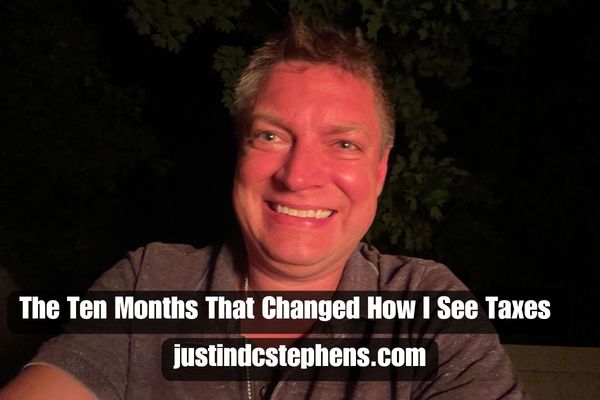
The Ten Months That Changed How I See Taxes
Time is the one thing none of us get back. Every hour I've spent chasing a paycheck, a title, or someone else's version of success is an hour I don't get to spend again. That's the lens I look through now for almost everything — including, it turns out, taxes.
A few years ago I took a sales job that didn't look like much on paper. I'd be selling for a tax strategist — an ex-IRS auditor who'd switched sides, left the agency, and started helping successful business owners keep more of what they built. I needed the work. I didn't expect it to change how I saw the entire system.
I sat in on the strategy calls. I listened to her walk business owners through exactly how the wealthy protect what they've built — not with tricks, not with anything shady, just with structure and patience. I learned the language. I learned to sell it. And I got to watch the results in real time: in ten months, the business went from $650,000 to almost $1.5 million in revenue. That kind of growth doesn't happen because the pitch is clever. It happens because the strategy actually works, and word gets around.
The strategy at the center of almost every deal was the same: a holding company. Business owners used it to build wealth under one umbrella and protect it long-term — legally, intelligently, with a plan that stretched decades past the current fiscal year. It wasn't about avoiding responsibility. It was about building something that could outlast a single year, a single business cycle, even a single lifetime.
Here's what stuck with me. That strategy worked because it treated wealth like something worth protecting over time — not something to spend down as fast as it came in. Every conversation I sat in on was really a conversation about patience. About ownership. About playing a longer game than the tax code seems to want you to play. And it was only available to people who already had a lot to protect in the first place.
I couldn't stop thinking about the people who didn't have that option. My parents. The people I grew up around. The guys I'd eventually work alongside stocking shelves at night. Every working American pays into Social Security — one of the biggest taxes most of us will ever pay — and the return on that investment doesn't show up until decades later, if it shows up at all. Nobody sits a factory worker or a night-shift stocker down and shows them a strategy call. Nobody builds them a structure. They just pay in, and wait, and hope the promise is still standing by the time they need it.
So I started asking a different question: what if regular people could use the same kind of long-term ownership thinking that wealthy business owners already use — except applied to the tax dollars everyone already pays, not just the profits they're trying to protect?
That question is where America's Holding Company came from.
I'm not going to pretend I have it all figured out. I don't. But the core idea is simple: what if paying into the system built you something you actually owned, the way an ESOP lets employees build equity in the company they work for over time — instead of just paying in and hoping it's there later? What if taxation could function less like an expense and more like an investment? Not a loophole for people who can afford good advice, but a structure built for everyone who pays in.
That's the whole thesis, really. Ownership shouldn't be something you have to already be wealthy to access. It should be something built into the system by default — earned over time, the longer you're in it, the more of a stake you hold. The same patience that protects a business owner's wealth across decades should be available to the person clocking in every day, not just the person who can hire someone like the strategist I worked for.
I know how big that sounds. I know the road from "idea" to "policy" is long — I'm talking years, maybe decades, not quarters. There's a lot still being built out, a lot of structure I'm not ready to share publicly yet, and I want to get it right before I do. But the time is going to pass either way. I'd rather spend it building toward something I believe in than not building at all.
This isn't a pitch. I'm not asking anyone to do anything yet. I'm just done keeping it to myself. AHC has been my dream for a while now, and if I'm serious about the vision, I have to be honest about where it came from and where I think it's going — even the early, unfinished parts. Even the version of it that's still just a thesis and a name, with the details still being worked out behind the scenes.
More on this as it develops. For now, I just wanted you to know the ten months that started it — and the question I haven't been able to put down since.
#TimeIsEverything

What I'm building
America's Holding Company
Ownership for everyone
who shows up
Most people spend their whole life paying into things they'll never own. I built the opposite of that. Twenty-seven dollars a month. A Christmas ornament. And real ownership that grows every year you stay.
Learn about AHC →Letters from the ladder
Real talk on ownership, rebuilding, and building something worth leaving behind. No fluff. Just what I'm actually learning — sent straight to your inbox.
America's Holding Company Inc.